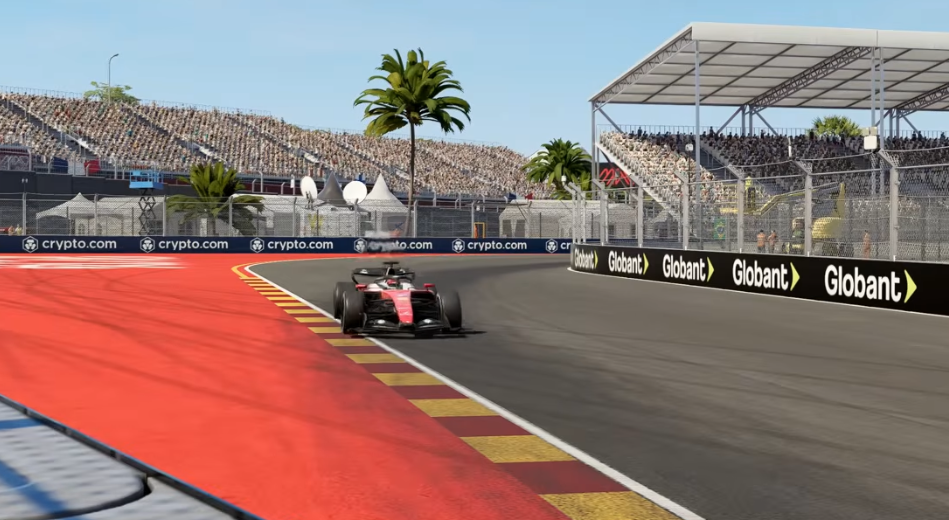
The F1 26 vs F1 25 cars comparison reveals two very different approaches to lap time and race performance.
On paper, the older F1 25 cars may still look quicker in some areas. They can carry strong speed through high-speed corners and, in certain situations, may have more outright pace. But once you put the F1 26 cars into an actual race, the picture becomes more interesting.
The new cars are not just about raw lap time. They race differently. Battery deployment, straight-line performance, overtake mode and active aero all change how you attack, defend and build momentum across a lap.
A recent in-game comparison of F1 26 vs F1 25 cars showed exactly why the new cars can be surprisingly effective in race conditions.
F1 26 Cars Are Different, Not Just Slower or Faster
The first thing to understand in any F1 26 vs F1 25 cars comparison is that the new cars have a different performance profile.
They may not always look faster through every part of the circuit, especially in high-speed corners where the F1 25 cars can still be very strong. But the F1 26 cars have tools that make them powerful in wheel-to-wheel racing.
The biggest advantages are:
- stronger electrical deployment
- straight-line mode
- overtake mode
- improved ability to attack on straights
- more tactical battery usage
This means the F1 26 car can sometimes lose a little through a technical section, then gain it back quickly on the next straight.
That makes races feel more dynamic. You are not simply waiting for DRS anymore. You are managing battery, timing deployment and choosing where to attack.
Straight-Line Mode Changes the Battle
One of the biggest differences is straight-line mode.
The F1 26 cars can adjust their aero configuration to reduce drag and improve speed on the straights. This gives them a very different attacking profile compared with F1 25 cars.
In the race comparison, the F1 25 cars often looked strong through corners, but the F1 26 cars had the tools to fight back once the road opened up. With enough battery saved, the newer cars could close quickly, pull alongside and make overtakes before the braking zone.
This is important because it changes how you think about racecraft.
In F1 25, straight-line attacks often relied heavily on DRS and slipstream. In F1 26, the battle is more about how much battery you have saved, when you deploy it and whether you have access to overtake mode.
Battery Management Is the Deciding Factor
The F1 26 vs F1 25 cars comparison also showed how important battery management is. For a full breakdown of how ERS works, see our F1 26 Season Pack ERS guide.
A car with battery available can be extremely strong on the straight. A car without battery can become vulnerable very quickly.
That means you cannot simply deploy everywhere. If you spend too much too early, you may be exposed later in the lap. If you save intelligently, you can create a decisive speed advantage in the best overtaking zones.
The most effective approach is to think one or two corners ahead.
Ask yourself:
- Where is the next proper overtaking zone?
- Do I need battery to attack or defend?
- Can I save energy now without losing too much time?
- Will using battery here help me complete the move, or just drain the pack?
The F1 26 cars reward planning. They are not just about pressing boost whenever you can.
F1 25 Cars Still Look Strong in High-Speed Corners
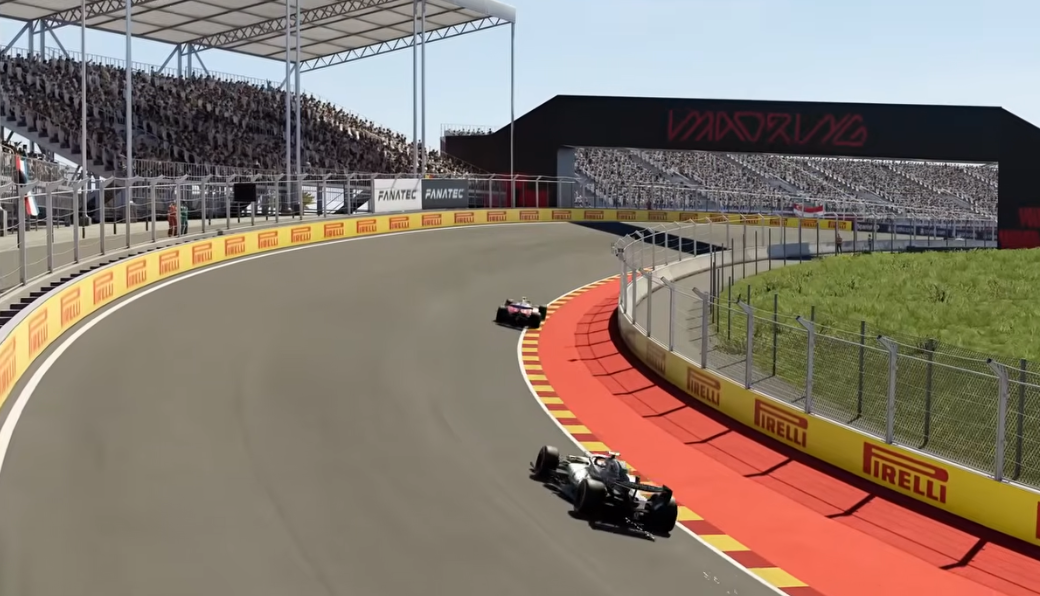
In the F1 26 vs F1 25 cars head-to-head, the older F1 25 cars are not suddenly weak.
In the comparison, they appeared particularly strong through faster cornering sections. This makes sense because the older car behaviour is more familiar and, depending on the game balance, may still be better suited to certain corner profiles.
However, being fast through a corner is not always enough to complete an overtake.
If the faster section is not a natural passing zone, the advantage can be difficult to convert. A car can close up in the high-speed part of the lap, but if it cannot get alongside before the braking zone, the move may never happen.
That is where the F1 26 cars can be stronger in a race. Their advantages often arrive in places where overtakes are actually possible.
Race Pace vs Overtaking Ability
This is the key takeaway.
The fastest car over one lap is not always the best car in a race situation.
The F1 25 car may have strong corner speed, but if it cannot deploy its advantage in the right areas, it can struggle to pass. The F1 26 car may lose time in some technical sections, but if it has stronger deployment on the straights, it can still be more effective in battle.
That makes the F1 26 Season Pack more strategic. Our F1 26 Season Pack overview covers all the key changes in detail. You need to understand where your car is strong and where it is weak.
If your advantage is straight-line performance, you should save battery for the exits that matter. If your rival is faster through corners, you need to defend carefully and avoid giving them an easy run onto the next straight.
Overtake Mode Is More Tactical Than DRS
The F1 26 overtaking system feels different from traditional DRS.
Rather than simply opening the rear wing when you are close enough, the newer system places more emphasis on electrical deployment and straight-line efficiency. This can make overtaking feel less automatic, but also more strategic.
You may not always fly past another car. Instead, you often use your battery to get alongside, force the other driver to defend and create pressure into the next braking zone.
That makes timing important.
Use battery too early and you may run out before the move is complete. Use it too late and you may not build enough speed to attack. The best moves come from saving energy, getting a good exit and deploying hard at the start of the straight.
AI Behaviour Can Change the Result
One interesting part of the comparison was how much AI behaviour affected the outcome.
Even if one generation of car appears faster in theory, the AI still has to use that performance properly. If the F1 25 cars are faster in areas where overtaking is difficult, or if they do not deploy energy aggressively enough, they may fail to convert pace into position.
Meanwhile, if the F1 26 cars use their tools better in the right parts of the lap, they can win the race even if they are not clearly faster everywhere.
This is an important reminder that in-game performance is not only about physics and car stats. It is also about AI logic, battery usage, track layout and racing context.
The New Circuit Adds Another Layer
The Season Pack’s new circuit also plays a major role.
With a mix of technical sections, high-speed corners and longer acceleration zones, it gives both car generations different chances to shine. The banked corner and flowing sections reward stability and confidence, while the straights give the F1 26 cars a chance to use their battery and straight-line tools.
Track limits also appear to be generous in some areas, which may change in future patches. If those limits are tightened, lap times and racing lines could shift.
For now, the track creates interesting racing because it offers multiple ways to be fast. You can gain in the corners, gain on the straights or use battery management to set up attacks.
What This Means for Players
If you are driving the F1 26 cars, the main lesson is simple: do not treat them like F1 25 cars.
You need to adapt your driving style.
Focus on:
- saving battery before key straights
- using deployment early on corner exit
- defending with enough charge available
- planning overtakes one straight in advance
- using straight-line mode properly
- avoiding unnecessary battery waste in weak overtaking areas
The new cars reward a more tactical approach. You can no longer rely purely on corner speed or simple DRS-style attacks.
Final Thoughts
The F1 26 vs F1 25 cars gap changes the way races play out.
The F1 25 cars may still be strong in certain areas, especially through faster corners, but the F1 26 cars have a different kind of strength. They are powerful in race situations because battery deployment, overtake mode and straight-line performance can create real attacking opportunities.
That makes the new cars more strategic to drive.
To be quick in the F1 26 vs F1 25 cars battle, you need more than a good racing line. You need to understand where to spend energy, where to save it and how to use your car’s strengths at the right moment.
If you want a stronger starting point for the new season, Track Titan now has F1 26 setup bundles available, including dry and wet setups, with Race and Quali Esports variations being added automatically once ready.